


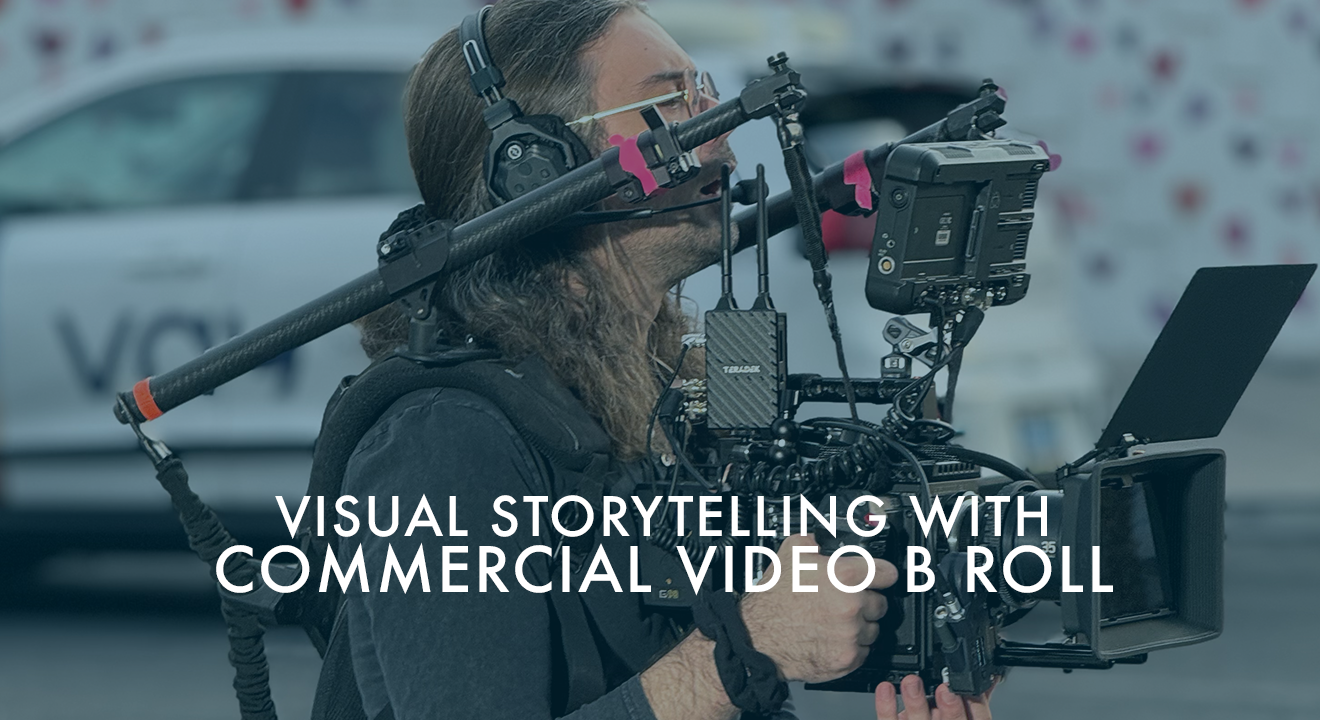

Capturing commercial video b roll is truly an art form. I know what some of you might be thinking: Really? Is there actually such a thing as creative secondary footage, especially for monotonous corporate events or convention halls? My answer is always a resounding yes!
Last month, our team at Indie Film Factory was hired to handle video production for a client hosting an event at a trade show here in Las Vegas. In addition to filming sit-down interviews and capturing all the gadgetry across vendor booths, our primary job was to generate a massive media vault the client could use for marketing campaigns throughout the entire year.
The client gave us a standard shot list: get footage of the registration booth, vendor logos, sponsor banners, big crowds, people shaking hands—the usual suspects. While that checklist was helpful as a starting baseline, relying on it entirely would have produced a generic recap video.
At Indie Film Factory, our core focus is storytelling first. Whether we are producing a narrative feature film for streaming platforms or cutting a corporate highlight reel for our commercial agency, storytelling guides every creative decision.
1. Visual Storytelling and Commercial Video Footage for Brands
The term B-roll has been misused for years, and plenty of creators have a basic misunderstanding of what it actually means. In traditional broadcast television news, A-roll referred to primary footage like the news anchor or main interview subject, while B-roll was secondary footage used to mask edit cuts or provide background context.
In modern cinema and commercial video, that strict line has blurred. Secondary imagery is just as important—if not more important—than the interview soundbites you capture for a client.
Challenge your production mindset with this exercise: What if you had to tell the entire story of your corporate trade show without any voiceovers, lower-third text graphics, or interview audio? How would you visually communicate what your industry does through shot selection and editing rhythm?
That is the purest form of filmmaking. Far too often, production teams lean on spoken dialogue or screen text to explain away what is happening. Text and voiceovers are helpful tools, but when you position yourself as a visual storyteller first, your videos become dramatically more engaging. Show more, tell less.
In live-action filmmaking, when a script relies too heavily on heavy exposition, suspense and dramatic tension vanish. Actions speak louder than words. That exact principle applied to how I directed our upcoming animated feature film, Trash Alley Heroes. It is a family-friendly comedy about talking trash cans. The characters obviously have funny dialogue, but their physical actions between line reads hold the real comedy. The way we frame sequences tells the core story long before a character speaks.
2. Elevating Basic B Roll in Commercial Video Settings
Let us apply this mindset to a real-world corporate shoot. The main registration desk at a conference is always at the top of a client’s shot list, but it can be filmed in two very different ways: basic or cinematic.
What value does a prospective attendee get out of watching footage of a registration desk? Are you showing them how long the lines are, or are you illustrating seamless check-in, great customer service, and warm interactions between staff and guests?
Those are the mini-stories you need to map out on set. Instead of slapping a camera on a gimbal and spraying random wide shots across the lobby, build a clear chronological sequence:
- Shot 1 (Wide Tracking): Mount the camera on a stabilizer and track behind an attendee as they walk up to the registration counter, placing the viewer right in their footsteps.
- Shot 2 (Medium Close-Up): Frame the event staff member smiling and greeting the guest warmly.
- Shot 3 (Over-the-Shoulder): Show the attendee smiling back and acknowledging the greeting.
- Shot 4 (Tight Insert): Capture a crisp close-up of the event badge being handed over the counter.
- Shot 5 (Action Payoff): Film the attendee clipping on their badge with a smile as they head toward the main exhibit hall.
That kind of structured sequence tells a complete story in five seconds, delivering far more value than flying around capturing random crowds standing in line.
3. Creative Ways to Enhance B Roll for Commercial Video Edits
In post-production, one of the biggest practical needs for extra footage is covering edit cuts in audio. Editors hate jarring jump cuts, especially when trimming repetitive dialogue or awkward pauses out of a single-camera interview.
Dropping secondary visual coverage over a splice cleans up the timeline effortlessly, but that visual coverage needs to be intentional.
If an executive is discussing a brand-new software innovation, do not just cut away to a generic shot of someone typing on a keyboard. Show the specific interface, highlight the high-tech screen analytics, or frame a close-up of the hardware in action.
You can also get creative with conceptual storytelling. Suppose an interview guest reflects on their early career struggles: “When I first got into this industry twenty years ago, I had no idea what I was doing.”
Since you do not have a time machine to film them twenty years ago, film them standing still in the middle of a bustling convention floor while crowds pass by around them in fast-motion. It is an engaging, creative way to visually match their audio reflection and add real emotion to a corporate edit.
Listening for Visual Cues on Set
Secondary footage is ultimately a tool to amplify emotion and make viewers connect with your brand on a deeper level.
When you are on set conducting interviews, take mental or physical notes. Listen carefully for key anecdotes or descriptive phrases your subject mentions, then spend fifteen minutes after the interview mocking up specific visual shots to match those exact soundbites. Planning those visual pairings on set makes the editing process faster, cleaner, and far more impact-driven.
Master Your Next Production
Whether you are a marketing director planning an upcoming campaign or a video creator heading out on location for a client, challenge yourself to show the story visual-first. When you approach a project with that mindset, your interviews, voiceovers, and text overlays will amplify incredible visuals rather than trying to compensate for boring ones.
Speaking of visual storytelling, be sure to check out the official trailer for Trash Alley Heroes, our new animated feature releasing on YouTube on November 20th!
If your team is ready to plan a cinematic, high-impact video project for your brand, contact Indie Film Factory today to discuss your vision.
Enjoy the rest of your week, keep creating, and as always, peace out!