



For many corporate brands, trade show video coverage remains a total afterthought during event budget planning. It is easy to understand why. Professional video production requires a significant financial investment. Marketing directors constantly grapple with how to distribute their annual funds effectively. Because of these tight constraints, teams often push event media to the bottom of their priority list.
However, something fascinating happened in the Las Vegas production scene recently. During one of the biggest convention weeks of the year, corporate vendors booked virtually every local crew solid. Then, client cancellations started pouring in across the market almost overnight.
After comparing notes with industry colleagues, the root cause became clear. Badge prices for vendors skyrocketed, which compressed overall marketing budgets. Worse yet, several major convention venues began enforcing strict limitations on external video crews.
The True Value of Trade Show Video Coverage
Venue restrictions are not entirely new in our line of work. Properties in Las Vegas often try to create a local production monopoly. They tell exhibitors that they must hire expensive in-house crews to film inside their booths.
Without diving into the legal gray areas of those property policies, every brand manager needs to remember one key fact: video is modern-day digital oil.
When a company invests in professional trade show video coverage, it strikes a rich digital oil vein. Decades ago, prospectors ventured into the desert and spent heavy capital on equipment with no guarantee of success. Many went broke during the search. However, those who pushed through and found oil reaped massive, ongoing dividends.
Video production functions the exact same way today. You make an upfront commitment. When you execute the shoot correctly, you walk away with a high-value media vault that powers your marketing campaigns for the next twelve months.
A trade show floor gathers your customers, prospective leads, and industry peers into a single room. Replicating that networking access outside of a convention costs a fortune. Skimping on video capture during those pivotal moments is a cardinal sin of event marketing.
Even as an independent studio owner who produces feature films, I treat every filming opportunity with that same discipline. Visual content builds long-term brand equity, whether we are capturing behind-the-scenes footage of our movie crew or filming inside our animation studio. Consistency drives everything.
Navigating Venue Restrictions for Trade Show Video Coverage
Even if a venue restricts outside commercial crews, your brand still has options. If strict venue rules prevent you from bringing in a full camera rig, instruct your on-site team to capture raw content using their smartphones.
Professionals who understand lighting, clean audio capture, and narrative interview framing should always manage high-end trade show video coverage. However, capturing raw footage on a phone is still better than walking away empty-handed. In worst-case venue scenarios, a professional post-production editor can still turn your internal smartphone footage into clean, usable promotional assets.
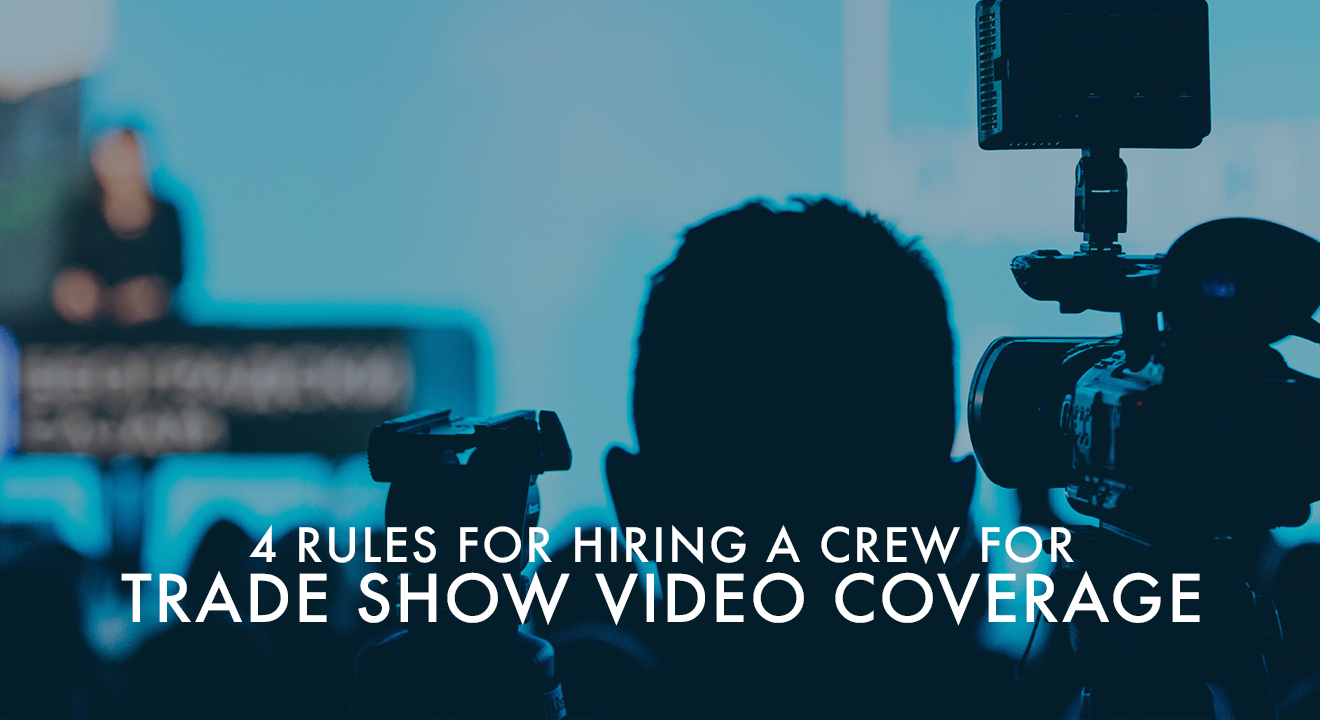
4 Rules for Booking Trade Show Video Coverage
Las Vegas is one of the top convention destinations in the world. That local density gives brands plenty of options when hiring a crew. You can leverage that variety, but you must ask the right questions before signing a contract.
1. Match the Production Scale to the Request
Always ask to see demo reels of past event work. Production houses that primarily shoot high-budget car commercials will price your event using commercial agency rates. Car commercials carry massive overhead that does not translate well to a two-day convention floor.
At Indie Film Factory, we clearly separate our production tiers. Our team produces narrative feature films for global streaming platforms, but our B2B production department specifically targets corporate relations, trade shows, and brand marketing needs with efficient packages.
2. Never Rely on a One-Man Band
A single camera operator cannot manage camera movement, lighting adjustments, audio monitoring, and talent management on a chaotic trade show floor. Professional trade show video coverage requires a structured team. At a minimum, your lead videographer needs a dedicated Production Assistant to manage gear, handle talent release forms, and clear logistical hurdles in real time.
3. Require Dedicated Audio Gear
A noisy convention hall will ruin great visuals if the audio sounds muffled or distant. Ensure your crew arrives with wireless lavalier microphones for interview subjects and a secondary handheld microphone for roving host questions.
4. Establish Your Target Look Early
A casual booth walk-through requires a completely different setup than a formal, sit-down interview area. Sharing your creative vision early allows the crew to bring compact lighting packages and the right crew to manage them. If high-level executives plan to speak on camera, hire a professional hair and makeup artist so leadership looks polished.
Why High-Level Trade Show Video Coverage Pays Off Year-Round
The ultimate takeaway for event marketers is simple: capture the footage. Do not stress about every single editing detail while you stand on the convention floor. While a comprehensive pre-production plan helps, capturing raw energy, client reactions, and product demonstrations gives your company an incredible asset library.
You do not always need a massive Hollywood setup, but you do need experienced operators who understand composition, dynamic lighting, and clear audio capture. When your marketing team deploys polished video assets six months from now, you will be glad you made the investment.
Ready to plan your next event capture strategy with an experienced team? Contact us to get a customized quote for your upcoming show. You can also explore our past trade show and b2b video shoots here.
Keep creating, keep filming, and have a fantastic week!
-Kelly
Indie Film Factory