


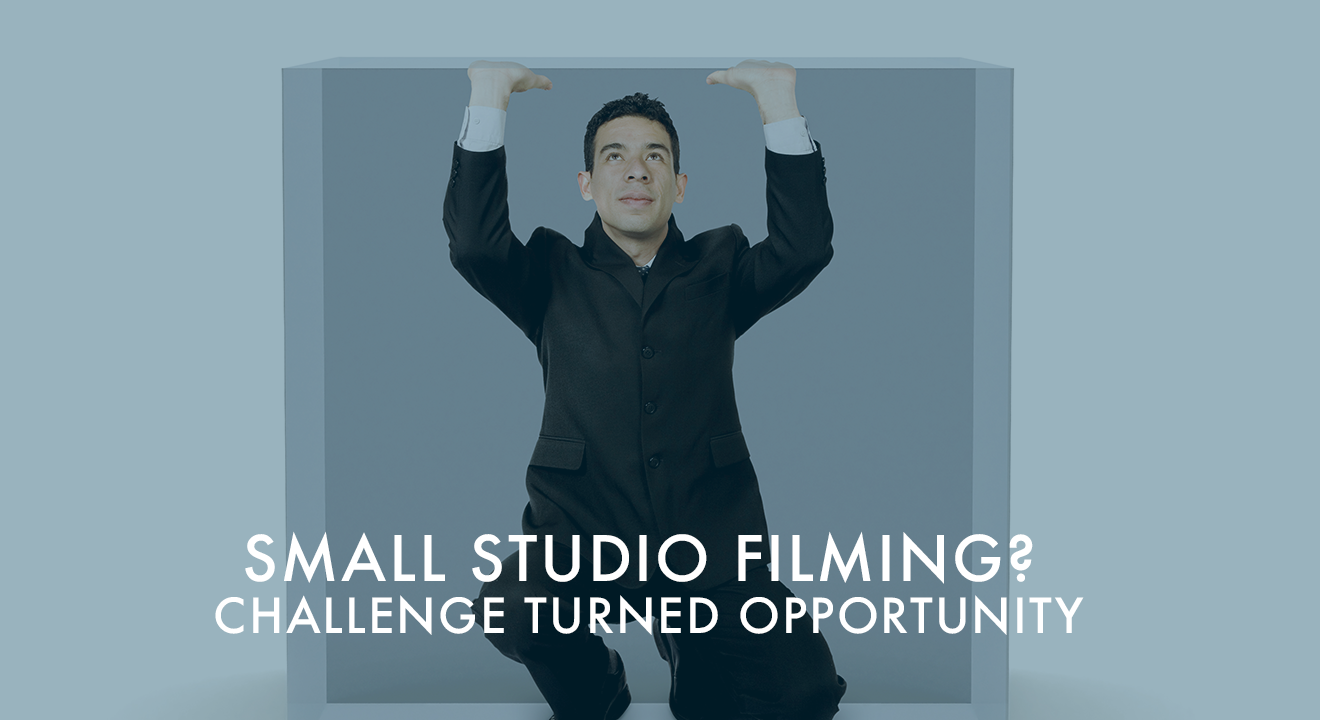

Small studio filming used to make me a little self-conscious.
Not in a dramatic, lose-sleep-over-it kind of way… but enough that when clients walked into Indie Film Factory for the first time, I’d instinctively start explaining the space before they even had a chance to take it in. You know the move. “Yeah, it’s a little smaller, but we’ve done a lot in here…”
Fifteen years later, I’ve completely flipped on that mindset.
Because the truth is, small studio filming isn’t a limitation—it’s a discipline. And if you know how to use the space, it can actually make your production sharper, faster, and more intentional.
The Time We Filmed in an Even Smaller Studio
Let me start with a story.
A few years back, our stage at Indie Film Factory was booked solid, and we still had a shoot to get done. So we rented a studio across the freeway—tucked near some railroad tracks here in Las Vegas. And when I say small… I mean small.
This wasn’t the kind of place where you could casually spread out.
There was barely any room for staging. No real separation between gear, crew, talent, or craft services. It felt like everything was happening in one compressed bubble.
And that’s when it clicked.
My team didn’t panic. We adapted.
We started partitioning the space—mentally first, then physically. Gear went into one corner. Talent had a designated prep area. Craft services got pushed as far away from camera as possible. It wasn’t pretty, but it worked.
That experience reinforced something I now fully believe:
Small studio filming works best when you stop thinking of the space as one room… and start treating it like multiple departments sharing a footprint.
Organizing a Small Space Like a Pro
The biggest mistake I see with small studio filming is people trying to operate like they’re in a warehouse-sized stage.
That’s when things fall apart.
Instead, you have to think like a minimalist. Every inch matters.
Start by defining zones:
- A filming zone (camera + lights only)
- A staging zone (gear and cases)
- A talent zone (hair, makeup, wardrobe)
- A craft services zone (far away from everything else)
Even if those zones are only a few feet apart, the mental separation helps your crew stay organized and focused.
At Indie Film Factory, we’ve refined this over the years so every department has a place—even within a compact footprint. But when you’re working elsewhere, you have to build that system yourself.
Scheduling Smarter (Not Bigger)
One of the easiest ways to break small studio filming is to invite too many people at once.
I get it. It’s convenient to have everyone there. But in a tight space, that convenience turns into chaos real fast.
Instead, stagger your crew and talent:
- Bring in lighting and camera first
- Cycle in talent only when needed
- Keep unnecessary crew off-site until their role is up
Think of it like a rotating door instead of a packed room.
This one change alone can make a small studio feel twice as big.
When Filming Small, Take Advantage of Exterior Studio Space
If your location allows it, look outside.
One of the smartest moves we’ve made during small studio filming setups is pushing non-essential functions outdoors.
That could mean:
- Craft services under a pop-up tent
- Gear overflow staged near a roll-up door
- Even a small holding area for talent
Of course, always check with the property owner first. Not every location allows this, and the last thing you want is to solve one problem and create another.
If you can bring in a small trailer or production vehicle, even better. It becomes your mobile staging area and frees up valuable interior space.
Keep Your Gear Footprint Tight
This one hurts a little, especially for filmmakers.
Because we all like options.
But small studio filming rewards restraint.
Only bring what you absolutely need. Not what you might need.
Extra gear doesn’t just sit quietly—it takes up space, creates clutter, and slows your team down. Keep backup items secured in a vehicle or separate area instead of crowding your working space.
The cleaner your footprint, the smoother your production runs.
Check out this great video on filming in tight spaces:
Prep Talent Before They Arrive
Here’s a simple trick that makes a huge difference.
If you’re shooting corporate interviews or anything controlled, have your talent arrive camera-ready whenever possible.
Hair and makeup offsite. Wardrobe prepped in advance.
That eliminates one entire department from your already limited footprint.
And suddenly, small studio filming feels a whole lot more manageable.
What We’ve Learned at our Studio Indie Film Factory and Filming Small
Over the years, we’ve gotten really good at making our space work for both large and small productions.
We’ve built in ways to partition the studio so departments don’t overlap. We’ve learned how to manage flow, minimize clutter, and keep things moving efficiently.
But I also know not everyone has access to a dedicated space like ours.
Sometimes you’re in a borrowed studio. Sometimes you’re in a tight rental. Sometimes you’re figuring it out on the fly.
And that’s okay.
Because small studio filming isn’t about having the perfect space—it’s about knowing how to use the space you have.
Studio Thoughts: Filming Small Doesn’t Mean Limited
If anything, small studio filming forces you to be better.
More organized.
More intentional.
More respectful of everyone’s role and space.
And honestly… that’s where good filmmaking lives anyway.
If you’re looking for a studio that’s already designed with this kind of efficiency in mind, feel free to check out our space here:
At the end of the day, whether you’re in a 10,000 square foot stage or something next to a set of railroad tracks…
It’s not about the size of the studio.
It’s about how you use it.
-Kelly
Peace Out!