


Developing a structured animation studio production workflow has not been an easy task for our team. In fact, I have spent the last five and a half years developing a highly customized system. This proprietary pipeline will easily do creative circles around most major Hollywood studios. Now, the reason why I write this statement is not to brag about ourselves. Instead, I want to point out an inspiring fact regarding the modern motion picture industry. The little guys are finally getting a massive leg up in the business. Furthermore, I still absolutely consider myself a little guy in this massive field. Independent creators can now execute incredibly impressive cinematic projects. This sudden shift happens entirely due to recent advancements in 3D animation and gaming technology.
This massive technical evolution is incredibly important for modern independent filmmakers. The professional tools of the trade are now completely accessible to you at any level. More surprisingly, these software applications are so effective that they are actively launching major careers in Hollywood. They help bridge the massive creative gap for contemporary creators. Consequently, artists can achieve incredible visuals on a practical budget. This allows independent teams to match the exact visual expectations that modern audiences demand to see on a theater screen.
Here is the absolute best part about our internal process. This is not artificial intelligence generating random, unpredictable video clips from text prompts. Instead, this is real, brass-knuckle animation workflow development. We designed this specific system from the ground up for small, agile creative teams.
Why Our Feature Film Relies on a Custom Animation Studio Production Workflow
During the recent pandemic, I found myself sitting at home with my family like most people. Naturally, I kept thinking about how to continue creating stories under strict lockdown rules. We could not go out into the field to shoot physical projects. Therefore, our traditional live-action filming options were completely limited. Fortunately, I do possess a strong technical background in 3D animation. In fact, I studied traditional 3D animation back in college during the early 2000s.
However, the applications and specialized hardware needed to process digital files back then were far too cost-prohibitive. More importantly, I had actively studied animation all the way through high school. My ultimate dream was to become a professional Disney animator. But as time turned out, the industry shifted dramatically. By the time I graduated from college, most traditional animation jobs had already headed overseas.
So, I did the next best thing and immediately went into live-action filmmaking. That deliberate pivot has given me a tremendous career spanning nearly three decades. I have made everything from sci-fi films and comedies to intense dramas and thrillers. But when the world paused, I found myself sidelined waiting for my next creative opportunity. That specific downtime sparked the formulation of our new pipeline. Creating a system based on free, open-source programs like Blender and Epic Games’ Unreal Engine quickly became a true passion project. This is when Dynamic Pudding Studios was born,
How Game Engine Technology Rewrote Our Animation Studio Production Workflow
I remember solidly the exact day that I composed my very first digital scene in Blender. It was a simple donut tutorial that I spent five whole weeks working on. If you have ever studied Blender, you have likely come across that exact donut tutorial. I would still highly recommend it to anyone. This is because the exercise offers a thorough and comprehensive evaluation of how to use this massive 3D program.
Fast-forward a year later, and I was already composing complex visual effects shots for our corporate video production clients. Additionally, my primary focus was to add advanced digital toolsets to my own personal skill set. I wanted to use these visual effects for the independent feature films we were producing internally. However, all of that changed one afternoon during a routine online search. I was scrolling to find another training video on Blender when I stumbled across the production story behind The Mandalorian.
Industrial Light and Magic shot that massive series using incredible cutting-edge techniques. Specifically, the production team had just pioneered the use of real-time gaming technology for massive LED volume walls. It was a complete, undeniable game-changer for physical production. I was so enthralled by this development that I did as much deep research as I could possibly find. The underlying technology fascinated me on a profound level.
The deeper I dug into the software, the more I realized its massive potential. I soon started thinking about how it could apply directly to the independent animation projects I was trying to launch. A few months later, I stumbled upon a complete start-to-finish tutorial. This video showed me how to render an entire cinematic sequence inside a real-time game engine. I immediately downloaded characters, placed virtual cameras, and started messing around with free motion capture data. The exact second I hit the render button, my entire perspective on filmmaking changed forever.
The Production Mechanics of Our Animation Studio Production Workflow
I sat back in my chair, sipped a hot cup of coffee, and watched this incredible rendering program come to life. Within mere minutes, I held a finalized, high-resolution clip of the scene I had just composed. At the age of 48, I know I am entering a brand new creative career path pretty late in life. But digital animation has always been my true calling. It remains something that I am extremely passionate about executing.
Although I have only been mastering these specific programs over the last five or six years, I possess an incredible advantage. This advantage comes directly from my long, practical live-action filmmaking career. Moreover, I am an exceptionally fast learner when it comes to software pipelines. To prove this point, our studio started out by producing short narrative films. We eventually delivered two award-winning short films that made it into several prestigious film festivals.
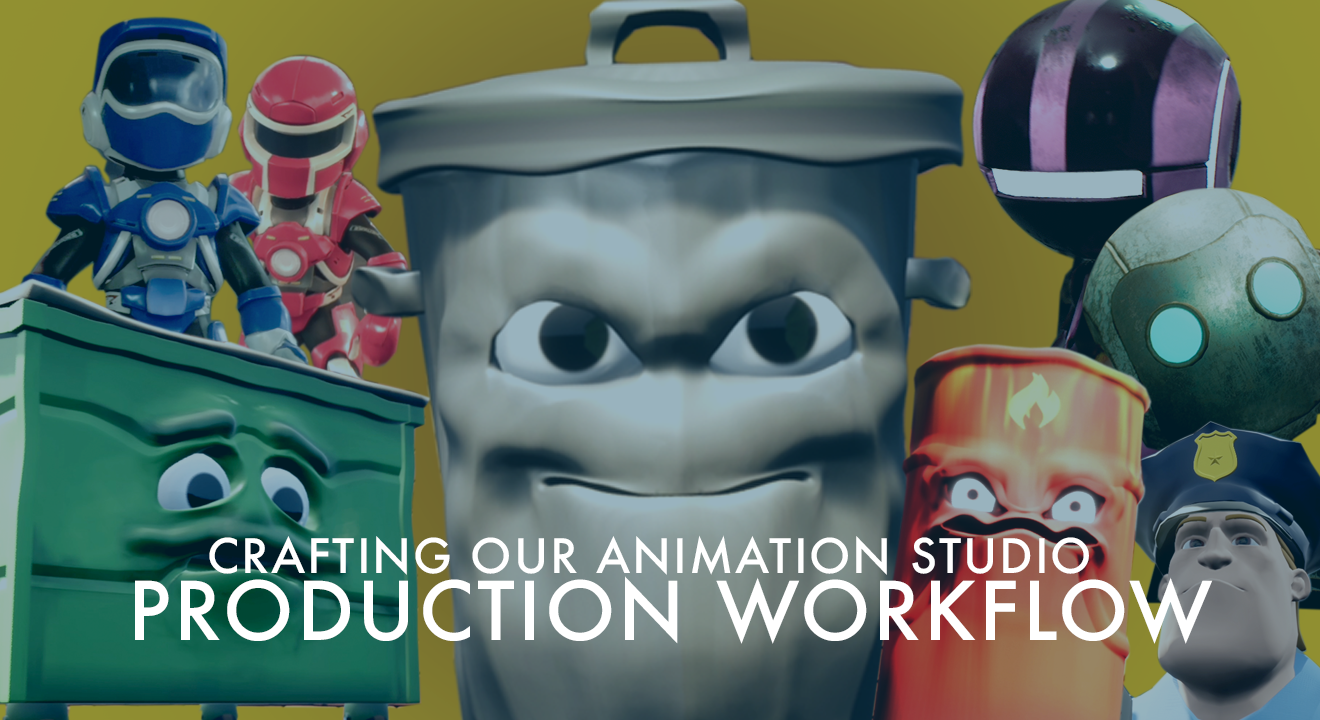
However, I did not want to stop at shorts. I saw how modern content distribution was changing the landscape for independent creators. Therefore, I started on a bold path to create a full-length animated feature film within a strict two-year span. I am incredibly happy to say that our team successfully achieved that massive goal. Later this year around November, we will officially release our very first animated feature film. This movie runs just under 61 minutes. It features characters from an original series I drew many years ago. That movie is called Trash Hole Heroes.
As I look back at how we achieved this milestone, the victory rested entirely on our systemized process. In fact, our specialized animation studio production workflow matters much more than the software applications themselves. In some specific cases, the pipeline matters even more than the individual artists working behind the scenes. During production, I hired two talented animators to help me. Together, we worked tirelessly to implement our processes into one single, unifying pipeline.
Breaking Down the Five Crucial Stages of Our Technical Pipeline
Our operational pipeline is quite simple, but you have to think outside the box to understand it. Many digital animators stay completely isolated within their core software programs. For example, a Maya artist will typically stay inside Maya. Similarly, Blender users usually stay within the Blender community. That artistic focus is completely fine. But we realized that the true power of our independent process lies entirely within our unique rendering capabilities.
Independent creators usually face a massive disadvantage unless they can afford expensive commercial render farms. Fortunately, a real-time game engine renders complex scenes at unprecedented speeds. Of course, there is a minor aesthetic trade-off. Any traditional animator will tell you that the visual fidelity of Blender is technically superior to a game engine. This is because real-time software uses pre-rendered calculations. Consequently, some lighting refractions and surface textures can lack deep cinematic fidelity.
Personally, I do not care about those minor software differences. My primary focus centers on telling great stories and connecting deeply with our audience. What I discovered is a way to control both worlds simultaneously. We compose our highly detailed assets inside Blender. From there, we migrate the scenes over to our real-time rendering engine. This grants us the high-performance model building of Blender alongside the rapid rendering speeds of a game engine.
Our specific animation studio production workflow consists of three distinct creative zones. First, we enter the Workshop phase. Before we do any animation, we must build our digital environments and characters from scratch. We also utilize smart tools like Live Link Face and Mixamo to capture organic human motion data. I like to think of this 3D application phase as our practical prop shop. It functions just like the real wardrobe and prop departments on a Hollywood studio lot.
Streamlining Our Visual Assets from the Soundstage to Final Editorial
Second, we enter the Soundstage phase. Once our assets are modeled, rigged, and textured, we migrate everything over to our real-time software. I view this game engine environment as our digital backlot. This is where our team literally pieces the final visuals together. We spend days reconnecting textures and optimizing files for final composition. From there, I personally go in to block out the virtual camera shots, adjust the digital lights, and direct the character performances.
Using these ultra-fast programs allows us to completely bypass the traditional pre-visualization phase. Most animation teams spend months or even years perfecting animatics before moving to final production. Eliminating this step saves our studio a tremendous amount of capital. It also brings the entire process incredibly close to the real-world experience of live-action filmmaking. I can see within minutes if a scene works. If it fails, I can fix it instantly and move forward.
Third, we enter the Post-Production Facility phase. Once our raw renders come out of the game engine, the files are immediately ready for the edit suite. We pull the clips directly into Final Cut or Premiere. What makes this process great is our non-destructive naming convention. If I need to change a shot, I simply re-render the file using the exact same name. The editing timeline then re-links the asset automatically. This workflow allows us to make quick adjustments seamlessly.
The entire motion picture economy is changing rapidly. Even major Hollywood studios are taking second thoughts before spending tens of millions of dollars on traditional production tracks. To survive and grow as an independent creator, you must possess the ability to deliver high-quality content very quickly. Learning these 3D programs is the fastest way to future-proof your career. Implementing a modern animation studio production workflow will significantly enhance your daily creative operations. If you want to collaborate with our innovative team, contact us to share your project goals.
Keep making moves, and peace out!