



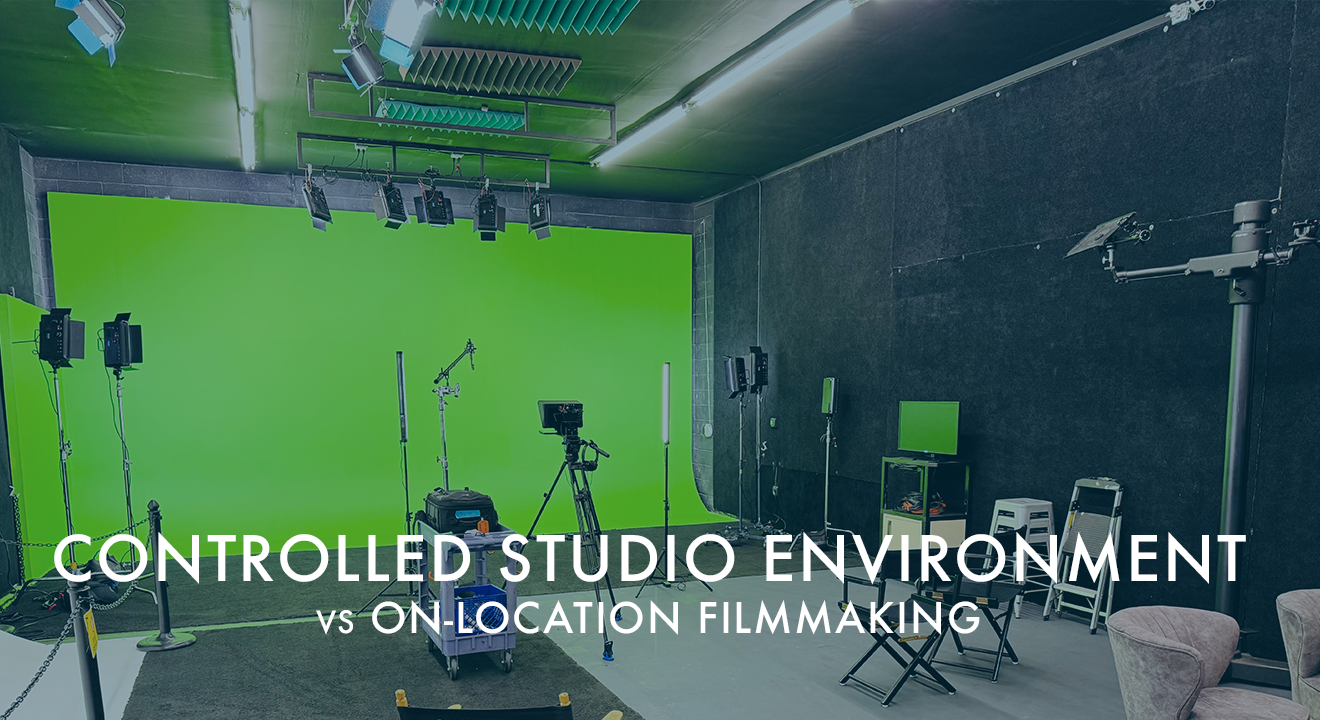

Controlled studio environment setups can quietly make or break a production long before the camera ever rolls. Access to a controlled studio environment at your fingertips is one of the most valuable tools a video production team can have. While I will always love filming on location, chasing real textures and authentic grit, there are times when realism is not the priority. In the corporate filmmaking world especially, a controlled studio environment can be the difference between a polished final product and something that feels distracted or compromised.
In this post, I want to walk through the real world benefits of working in a studio setting, some of the tradeoffs, and how you can think strategically about your next shoot. Whether you are planning executive interviews, branded content, or a marketing series, the environment you choose matters more than most people realize.
Why a Controlled Studio Environment Elevates Corporate Productions
A few months ago, we had a client fly into Las Vegas for a major conference. Their goal was straightforward. Capture a handful of high level C suite interviews they could repurpose throughout the year. The most convenient option seemed obvious. Rent a hotel room in the same building as the convention center so stakeholders could quickly step away from meetings and head upstairs to film.
From a logistical standpoint, it made sense.
However, what no one anticipated was the constant stream of noise disturbances inside the hotel. Housekeeping carts rolled by. Doors slammed. Guests talked loudly in the hallway. Airplanes passed overhead. Phones rang in neighboring rooms. Each interruption forced us to pause and reset.
The team did what professionals do. We managed the sound as best we could. In the end, the footage was usable. Still, I remember watching the executives in the interview chair. Every unexpected noise pulled their attention away from the conversation. Distractions may seem minor, but they affect performance and energy.
Looking back, I often think about how much smoother the day would have been inside a controlled studio environment where we could fully manage sound, lighting, and comfort.
Sound Control Inside a Studio Setting
Everything on set revolves around sound.
That is not an exaggeration. From theatrical feature films to small corporate interviews, audio quality shapes how an audience perceives credibility and professionalism. Viewers will forgive a slightly imperfect image long before they forgive bad audio.
A controlled studio environment allows you to minimize outside noise and reduce echo. Walls can be treated. Doors can be sealed. Lighting can be shaped without fighting harsh window spill. When interviews happen in hotel rooms or boardrooms, those spaces are rarely designed for production. Conference tables get in the way. Bright windows introduce uncontrollable light. HVAC systems hum loudly in the background.
Inside a designated studio space, those variables are managed intentionally.
If you want to improve your understanding of production sound, I recommend watching this helpful breakdown from Sound Pro Tips on YouTube.
Good sound is not accidental. It is planned.
The Efficiency of a Controlled Studio Environment
Logistics often determine whether a shoot feels smooth or chaotic. A controlled studio environment gives you space to think ahead.
Crew members need room to set up safely. Talent needs an area to relax before stepping in front of the camera. Media managers require a secure space for data backups. Craft services needs a designated corner so people can refuel without disrupting production.
When you try to squeeze all of that into a cramped hotel room, corners get tight quickly. Cables run through narrow walkways. Light stands crowd the frame. Talent feels boxed in. None of that inspires confidence.
In a proper studio environment, you can consolidate everything under one roof. Gear storage stays organized. Break areas remain separate from the shooting area. The set stays clean. I have always believed that a clean set reflects a professional mindset. When things feel orderly, performance improves.
Creating a Controlled Studio Environment Without a Dedicated Stage
Now let me clarify something important. You do not always need a permanent studio facility to benefit from a controlled studio environment. Many corporate clients rent large conference rooms or empty ballrooms and temporarily convert them into filming spaces.
We have done this several times.
An empty ballroom can become a highly effective studio style production space with a bit of planning. Sound blankets can be hung to reduce echo. Lighting grids can be assembled to shape the scene. Gear can be compartmentalized neatly around the perimeter of the room.
Even office spaces can be adapted. The key is understanding how sound behaves. Walk into a tiled bathroom and you will immediately hear your voice bounce. Step into a carpeted bedroom and the echo disappears. Fabric absorbs sound. Hard surfaces reflect it.
One of the simplest investments you can make is in moving blankets. Professional sound blankets can be costly, but heavy duty moving blankets often accomplish a similar goal. Hanging them along walls or near reflective surfaces can help deaden the room and reduce reverb. The more soft material you introduce, the more control you gain.
That control transforms an ordinary room into something much closer to a controlled studio environment.
Professionalism and Perception in a Studio Controlled Setting
Presentation matters.
When executives walk into a polished studio space that has been intentionally prepared, it communicates seriousness. The lighting is dialed in. The background is clean. The crew has room to operate confidently. That atmosphere influences how talent performs on camera.
Small hotel rooms, on the other hand, can unintentionally signal a rushed setup. Even if the footage looks decent, the environment can feel improvised. Stakeholders notice those details.
A controlled studio environment also allows for flexibility. If an unexpected truck drives by or air traffic passes overhead, you often have the ability to pause, reset, and continue without external pressure from neighboring guests or facility managers.
Freedom to control timing is valuable.
Balancing Realism and Control
I still love filming on location. Real environments offer textures that cannot be replicated perfectly on a stage. For narrative work, that authenticity can be powerful. For branded storytelling, a hybrid approach often works best. Capture establishing shots on location, then move interviews into a controlled studio environment where you can manage every variable.
The outside world does not care about your production schedule. Noise will happen. Interruptions will occur. Weather changes. Traffic builds. Airplanes pass.
A controlled studio environment gives you leverage against those variables. It does not eliminate every challenge, but it dramatically reduces them.
Planning Your Next Shoot with Environment in Mind
Before booking your next interview or marketing production, ask yourself a few questions.
How important is clean audio to this project?
Will talent perform better in a quiet, organized space?
Do we need room for crew, gear storage, and media management?
Is convenience worth sacrificing control?
Sometimes filming near the action makes sense. Other times, stepping away from the chaos into a controlled studio environment saves time, protects quality, and elevates the final product.
At Indie Film Factory, we help clients think through these decisions carefully. If you are planning a corporate video, branded campaign, or executive interview series and want to explore studio options, you can connect with us.
Choosing the right environment is not just about walls and lights. It is about control, comfort, efficiency, and ultimately delivering a result that reflects your brand at its best.
That’s all I have today. Be kind and keep making movies.
Peace Out!
-Kelly