

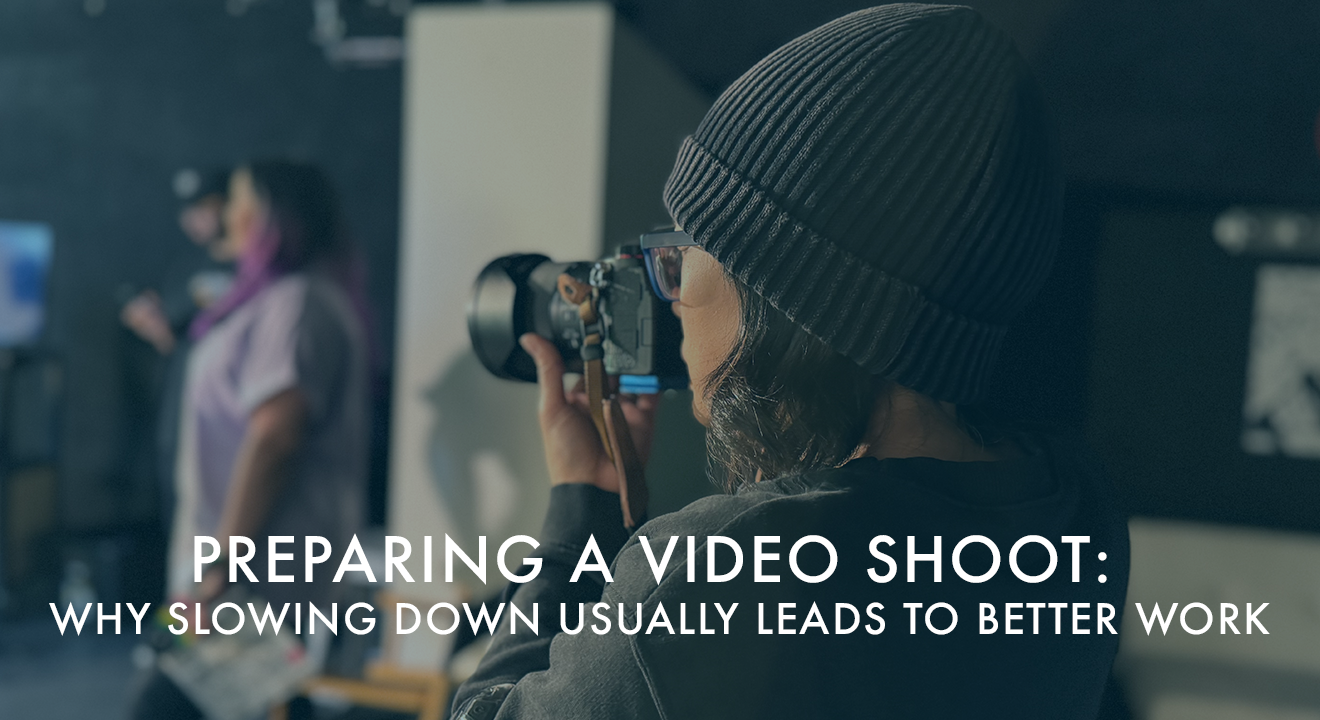

In today’s post, I want to talk about something that sounds obvious, almost boring on the surface, but tends to get ignored way too often: preparing a video shoot.
I understand why. The barrier to entry for video is basically gone. You can shoot, edit, and publish content faster than ever. Social platforms reward speed, volume, and spontaneity. In a lot of cases, planning too much really can slow you down or make things feel stiff.
And honestly, there are times when that loose, unplanned energy is exactly what works.
But this post isn’t really about those moments.
This is about what happens when you’re trying to make something intentional. Something directed. Something that actually represents your brand, your story, or your voice without feeling rushed or disposable.
That question hit home for us recently when our Dynamic Pudding YouTube channel became monetized. One short film in particular, Empathy Unknown, unexpectedly started performing well and brought in thousands of new subscribers. It completely shifted our expectations.
Naturally, we felt pressure to keep going. More uploads. Faster turnaround. Stay visible. Feed the machine.
So we tried that approach.
And almost immediately, we could feel the difference. Viewers clicked off sooner. Engagement dipped. Worse than that, the work stopped feeling like something we were proud of. It felt rushed, thin, and a little hollow.
What became clear pretty quickly is that YouTube, unlike some other platforms, tends to reward creators who take the time to really think through what they’re making. Preparing a video shoot properly started to matter again. The videos that took more time, more thought, and more care consistently performed better over the long haul.
That realization is what sparked this post.
Thinking Through the Video Audience When Preparing Your Shoot
One of the most overlooked parts of preparing a video shoot has nothing to do with gear, lighting, or cameras. It starts with understanding who the video is actually for.
That sounds simple, but it’s amazing how often it gets skipped.
Before writing anything or planning shots, it helps to slow down and ask a few basic questions. Who is watching this? Where are they watching it? Why would they care? What do they already know, and what do they need explained?
Those answers influence tone, pacing, style, and even how long the video should be. A piece meant for industry professionals is going to feel very different from something aimed at a general audience scrolling on their phone.
When you’re clear about who you’re talking to, a lot of creative decisions become easier. Preparing a video shoot gets simpler because you’re not guessing your way through every choice.
Writing a Script Even When It Feels Unnecessary
Another major part of preparing a video shoot is scripting, even if the final product doesn’t feel scripted at all.
Yes, there are plenty of AI tools that can generate usable copy quickly. They’re helpful, especially as editors or assistants. But relying on them from start to finish usually leads to something that feels generic or slightly off.
A better approach is getting your own thoughts out first. That might mean typing, dictating into your phone, or even just outlining ideas in rough form. Once that’s done, tools can help clean things up, tighten the structure, or clarify the message.
A script does more than define what’s being said. It helps you see the entire project before you shoot it. It shows you what shots are actually needed, what locations make sense, and what can be cut early instead of costing time and money later.
In a lot of ways, preparing a video shoot is really about making decisions earlier so you’re not forced to make them under pressure on set.
Preparing For Video Locations For Your Shoot
Locations are one of those things that quietly complicate everything.
Every new location adds logistics. Travel time increases. Access becomes an issue. Permits, insurance, and coordination all start stacking up. Even small location moves can eat into a schedule faster than expected.
When preparing a video shoot, it’s worth asking whether multiple locations are truly necessary. In many cases, one flexible space can serve multiple purposes with a little creativity. Office buildings, studios, or controlled interiors often allow you to move faster and stay focused.
Location moves tend to slow productions down more than people realize. Reducing them is one of the easiest ways to save time and keep stress levels manageable.
Understanding Production Without Overcomplicating It
You don’t need to be a filmmaker to benefit from understanding the basics of production. Having a general sense of what matters and what doesn’t can protect you from overspending or being sold something you don’t actually need.
Preparing a video shoot becomes much easier when you understand that not every project requires high-end cinema cameras, massive lighting setups, or complex rigs. A local business video has very different needs than a feature film proof of concept.
Audio quality, clarity of message, and comfort on camera often matter far more than resolution or lens choices. In some cases, overly polished visuals can even work against authenticity, depending on the audience.
If you’re hiring a production company, it’s reasonable to ask what gear they’re bringing and why. The tools should match the goal. If they don’t, something may be off.
Casting, Real People, and Managing Expectations
Talent decisions can have a bigger impact on a project than almost anything else.
For narrative work, taking time to cast properly is critical. That means budgeting appropriately, understanding union or non-union considerations, and giving yourself enough time to find people who actually fit the project.
For non-actors, the focus shifts. Real people still need to feel comfortable, respected, and prepared. Scheduling matters. Clear communication matters. Proper releases matter. A rushed or awkward interview usually shows on screen.
When preparing a video shoot, it helps to spend time upfront talking with the people involved. A short conversation beforehand can save hours of frustration later.
Making the Production Day Easier on Everyone
Production days are demanding, even on small shoots.
They’re hard on the people performing, the crew supporting them, and the clients paying for it all. That’s why organization matters more than people think.
A clear schedule, a tidy set, and basic hospitality go a long way. Even something as simple as having water and snacks available can change the tone of the day.
People remember how a shoot felt. Preparing a video shoot with the human experience in mind increases the chances that people will want to work with you again.
Knowing What You Actually Need to Capture
One of the biggest mistakes newer creators make is overshooting.
Every extra setup costs time. Every unnecessary shot adds complexity in post. Instead of relying on coverage for safety, it’s better to think through how the video will actually be edited.
Learning basic editing principles helps. Visualizing the final piece before the shoot helps even more. When you know what you need, you can focus on getting those moments right instead of chasing everything.
Preparing a video shoot well often means being disciplined enough to say no to shots that don’t serve the final edit.
Why Preparation Protects the Video Work and Your Shoot
At the end of the day, preparing a video shoot isn’t about being rigid or over-controlling. It’s about giving yourself the best chance to make something you’re proud of without unnecessary stress.
Platforms will keep changing. Algorithms will keep shifting. What lasts is whether your work feels thoughtful, clear, and worth someone’s time.
If you’re planning a project and want help thinking through the process, strategy, or execution, you can learn more about working with us here:
Hope this helps. Enjoy the rest of your week.